Modern robots depend on carefully engineered mechanical structures to achieve accurate movement, consistent performance, and long service life. Whether a machine operates on a factory floor, moves through a warehouse, or performs complex humanoid movements, its structural components must support actuators, sensors, cables, and control equipment without introducing unnecessary weight or unwanted vibration.
Material selection plays a major role in meeting these requirements. Engineers must consider load capacity, stiffness, fatigue resistance, dimensional accuracy, manufacturing complexity, and operating conditions before choosing a material for a particular part.
Aluminum is frequently considered for robotic structures because it offers relatively low density, useful corrosion resistance, and flexibility across several manufacturing processes. When combined with appropriate geometry and quality control, it can support efficient mechanical designs for many types of robotic equipment.
The Role of Structural Components in Robotics
A robot is an integrated mechanical and electronic system. Its structural components establish the physical relationships between motors, bearings, sensors, and working tools. If these components deform excessively or lose alignment, the robot may struggle to maintain the accuracy expected by its control system.
Supporting Loads and Maintaining Alignment
Robot frames and brackets must carry the weight of the machine itself as well as payloads and operational forces. A robotic arm, for example, experiences changing loads as it extends, rotates, accelerates, and stops.
The structure must remain sufficiently rigid throughout the intended operating range. Excessive deflection can affect tool positioning, while vibration may interfere with delicate tasks such as inspection, assembly, or precision handling.
Reducing Unnecessary Moving Mass
The mass of moving parts influences the torque and energy required for motion. Components positioned far from a rotational axis can have a particularly strong effect on the inertia of an articulated mechanism.
Carefully designed aluminum parts may help reduce mass in selected moving assemblies. However, reducing weight should not compromise the structural strength needed to withstand repeated movement, impacts, or payload changes.
Protecting Sensitive Equipment
Robotic structures also serve as mounting platforms and protective housings for cameras, sensors, wiring, batteries, and computing hardware. These components may require stable positioning and protection from dust, vibration, or accidental contact.
A well-designed enclosure can simplify maintenance while helping organize internal components. Engineers should consider access panels, cable routing, ventilation, and mounting interfaces during the initial design stage rather than adding them after the structure has been finalized.
Why Aluminum Is Used in Robotic Design
Aluminum offers a combination of characteristics that can make it suitable for selected mechanical parts. Its value depends on the alloy, temper, product form, and application rather than on the metal alone.
Relatively Low Density
Aluminum is considerably less dense than steel, which can help reduce the mass of appropriately designed components. This can be beneficial for robotic arms, mobile platforms, and humanoid systems in which moving weight affects mechanical performance.
The final weight savings depend on geometry and stiffness requirements. Because aluminum has a lower elastic modulus than steel, a component may need a different cross-section or greater thickness to achieve comparable rigidity.
Machinability and Fabrication Flexibility
Aluminum products are available as sheets, plates, bars, and extrusions. Depending on the design, these forms can be machined, cut, bent, or assembled into structural components.
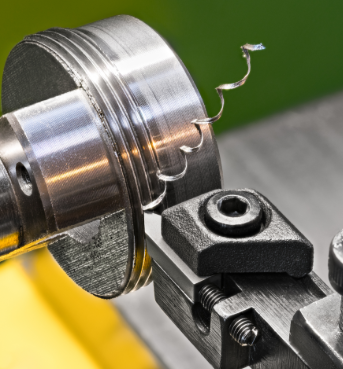
CNC machining is useful for producing accurate bearing seats, mounting holes, motor interfaces, and sensor brackets. Sheet fabrication may be more appropriate for covers and panels, while extrusions can provide useful structural shapes with integrated channels or ribs.
The manufacturing process should be chosen according to dimensional tolerances, production volume, finishing requirements, and the loads the finished component must withstand.
Corrosion Resistance
Many aluminum alloys form a naturally occurring oxide layer that helps protect the surface from corrosion. This can be useful for robotic equipment operating in ordinary industrial or commercial environments.
Nevertheless, corrosion performance varies with alloy and environmental exposure. Moisture, cleaning chemicals, salt, and contact with dissimilar metals may introduce additional risks. Suitable coatings, isolation methods, and maintenance practices may be required.
Common Robotic Components Made With Aluminum
Different components impose different mechanical demands, so engineers should select materials according to each part’s function.
Frames and Structural Panels
Frames establish the robot’s basic geometry and support its major assemblies. Aluminum plates and profiles can be used for selected frames, side panels, internal supports, and mounting structures.
Designers may use hollow sections or integrated ribs to improve stiffness while limiting mass. The geometry should also allow room for cables, electronics, cooling, and maintenance access.
For larger machines, engineers must examine how loads move through the frame and whether joints introduce localized stress. A lightweight frame is only effective if it maintains stability during the robot’s full range of operation.
Motor Mounts and Actuator Brackets
Motor mounts connect actuators to the robot’s structure. They must preserve alignment and resist forces generated during acceleration, braking, and changes in load.
Machined aluminum brackets can provide precise mounting surfaces and convenient access to fasteners. However, bearing seats and highly loaded interfaces may require careful assessment of local stress, wear, and deformation.
Where necessary, designers can use inserts or other materials at contact points to improve thread durability or resist localized loading.
Robotic Arms and Linkages
Arm sections and linkages influence reach, payload capability, and movement accuracy. Reducing their mass may lower the inertial loads experienced by joints and drive systems.
In suitable applications, robotic aluminum components can be considered for structural links, brackets, and supporting plates where the alloy and geometry meet the design requirements.
The main challenge is balancing mass against bending stiffness and fatigue resistance. Long or slender components may deflect under load, while repeated movement can create fatigue concerns around holes, joints, and changes in section thickness.
Sensor Mounts and Equipment Housings
Sensors often require stable positioning to produce consistent measurements. A poorly designed mount can introduce vibration or alignment changes that reduce the usefulness of cameras, range sensors, and other measurement devices.
Machined or fabricated aluminum housings can provide durable mounting points and protect selected equipment. Engineers should consider thermal expansion, electrical isolation, cable access, and any environmental protection required by the application.
Mobile Robot Chassis
Mobile platforms need a chassis that supports batteries, drive assemblies, sensors, and payloads. Aluminum can be useful when designers want a combination of low mass, rigidity, and accessible mounting points.
The chassis must still withstand floor irregularities, impacts, wheel loads, and vibration. A low center of gravity and suitable weight distribution may be just as important as reducing the overall mass.
Selecting the Right Aluminum Alloy
Not all aluminum alloys provide the same performance. Selection should be based on the component’s loading conditions and manufacturing requirements.
Strength and Stiffness
Strength determines how much stress a material can withstand before yielding or failing under specified conditions. Stiffness describes how much it deforms under load.
These properties are related but not interchangeable. A high-strength alloy may resist permanent deformation while still allowing more elastic deflection than a steel component with the same geometry.
Engineers should calculate both stress and deflection, particularly for precision mechanisms and long structural members.
Fatigue Performance
Robots frequently repeat movements, which can expose components to cyclic stresses. Over time, fatigue damage may develop even when individual loads remain below the material’s static strength.
Fatigue performance depends on alloy, temper, surface finish, manufacturing defects, stress concentrations, and joint design. Rounded transitions, suitable fastener placement, and appropriate inspection can help improve reliability.
Alloy and Temper Selection
Some 6xxx-series alloys provide a practical balance of strength, corrosion resistance, and machinability. Selected 7xxx-series alloys offer higher strength but may introduce different corrosion, fabrication, or cost considerations.
The correct choice depends on the precise grade and temper, not simply the series designation. Published mechanical data should be checked against the expected component thickness, product form, and manufacturing process.
Manufacturing Accuracy and Quality Control
Precision robotic parts often contain interfaces for bearings, gears, motors, and sensors. Small dimensional errors can affect alignment and assembly, so manufacturing tolerances must be established early.
CNC machining can provide accurate features, but the process must account for tool selection, workholding, cutting conditions, and potential distortion. Thin sections may require special attention because machining forces can affect their shape.
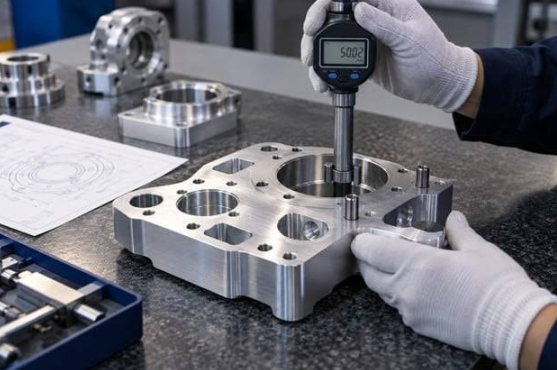
After manufacturing, critical parts may require dimensional inspection, surface checks, and verification of material specifications. Components exposed to significant cyclic loads should also be evaluated for defects that could influence fatigue life.
When welding is used, engineers must consider the effect of heat on the selected alloy and temper. The strength of the completed joint should not be assumed to match the base material’s published properties.
Design Challenges and Practical Solutions
Using aluminum effectively requires attention to several common engineering challenges.
Managing Deflection
Aluminum’s lower elastic modulus can lead to greater deflection than steel in geometrically identical parts. Engineers can address this through deeper cross-sections, ribs, optimized shapes, and better support placement.
Simulation can help identify weak regions, but physical testing remains important when loads or boundary conditions are uncertain.
Preventing Joint Wear
Fasteners and mounting points can experience repeated loads or localized pressure. Threaded inserts, suitable fastener selection, and adequate engagement can improve durability in appropriate designs.
The correct solution depends on the load, material thickness, service environment, and maintenance requirements.
Controlling Total Cost
Material price is only one part of the total cost. Machining time, tooling, surface finishing, assembly, inspection, and replacement frequency can substantially influence the final expense.
A design that minimizes material usage but requires difficult machining may not be economical. Engineers should compare the complete manufacturing and lifecycle costs of realistic alternatives.
Frequently Asked Questions
1. Why is aluminum suitable for robotic structures?
Aluminum offers relatively low density, useful corrosion resistance, and compatibility with machining, sheet fabrication, and extrusion. These properties make selected grades suitable for frames, brackets, panels, and housings.
2. Can aluminum parts withstand repeated robotic movement?
Yes, when the alloy, geometry, joints, and manufacturing quality are appropriate for the expected loads. Engineers must evaluate fatigue, stress concentrations, deflection, and the intended service life.
3. How can engineers improve the reliability of aluminum robotic parts?
They can select a suitable alloy and temper, optimize structural geometry, design durable connections, maintain manufacturing tolerances, and validate components through testing and inspection.
Conclusion
Reliable robotic systems depend on structures that combine strength, stiffness, manageable weight, and precise manufacturing. Aluminum can provide practical advantages for many frames, brackets, housings, and moving components when its properties match the application.
Successful design requires evaluating the complete component rather than choosing a material based on density or strength alone. By considering fatigue, alignment, fabrication, corrosion, and lifecycle cost, engineers can develop robotic structures that perform consistently and remain maintainable over time.