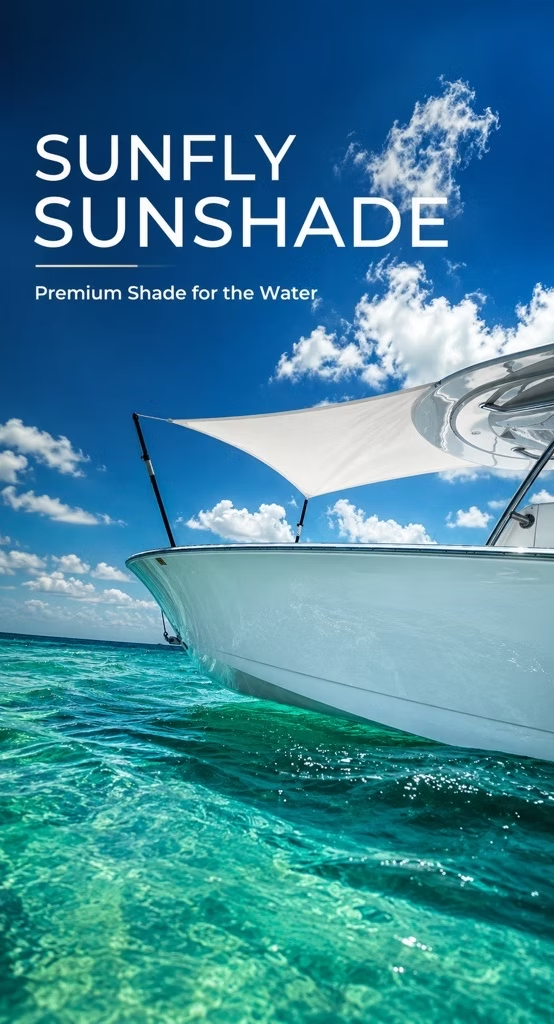
Boat shade equipment has to perform without taking over the deck. Anglers need clear casting areas, passengers need usable seating, and boat owners often want shade that can be installed without leaving a bulky structure in place permanently. The material used for the supporting poles has a direct effect on how easy the system is to handle and how well it supports the shade fabric.
A carbon fiber boat shade pole offers a combination of low weight, rigidity, and structural strength that suits removable marine shade systems. These characteristics can be particularly useful when poles are installed into rod holders and removed after use.
For boat owners comparing material and configuration options, a carbon fiber boat shade pole provides a starting point for understanding how carbon fiber can support lightweight shade without sacrificing useful deck space.
What Is a Carbon Fiber Boat Shade Pole?
A carbon fiber boat shade pole is a structural support designed to hold shade fabric above a boat’s deck. Instead of relying on a heavy permanent frame, a pole-based system can use strategically positioned supports to create a removable shaded area.
Carbon fiber is made from fine carbon filaments combined with a resin matrix. The resulting composite material is valued for its strength, stiffness, and relatively low weight.
How Carbon Fiber Is Used in Marine Shade Systems
In a marine shade application, carbon fiber poles provide the vertical or angled support required to position the fabric. The poles can form part of a larger arrangement that includes tensioning lines, fittings, fabric, and mounting points.
The design of the complete system matters as much as the pole material. A strong pole still needs suitable connections and appropriate fabric tension to perform effectively.
How Rod-Holder Shade Poles Work
Many removable boat shade systems use existing rod holders as mounting points. The pole is placed into a compatible holder, while the upper section connects to the shade fabric or associated hardware.
This approach can reduce the need for permanent modifications. It also allows the poles to be removed when the boat needs an open deck for fishing or other activities.
Why Material Selection Matters
Shade poles need to support fabric while remaining manageable during installation and removal. Heavy poles can make repeated setup inconvenient, while poles with insufficient rigidity may not provide the desired support.
Material selection therefore affects handling, structural behavior, storage, and long-term use.
Why Is Carbon Fiber Suitable for Boat Shade Poles?
Carbon fiber has several characteristics that align with the demands of removable marine shade equipment.
High Strength-to-Weight Ratio
One of carbon fiber’s most recognized properties is its high strength-to-weight ratio. It can provide significant structural performance without requiring the same mass as some traditional materials.
For a removable boat shade system, lower weight can make the poles easier to carry and position.
Lightweight Handling
Boat owners may need to install, remove, and store shade poles regularly. A lightweight boat shade pole can reduce the physical effort involved in these tasks.
Lower weight can also make it easier to transport poles between storage areas and the boat.
Rigidity Under Load
Shade fabric can experience tension and movement, particularly when exposed to wind. A rigid support helps maintain the intended shape and positioning of the fabric.
Carbon fiber’s stiffness makes it suitable for applications where maintaining a stable pole position is desirable.
Suitability for Marine Applications
Marine equipment is exposed to moisture, salt, sunlight, vibration, and repeated handling. Carbon fiber itself does not rust like steel, but the complete pole assembly still includes fittings and connection points that require proper care.
Material selection should therefore be considered alongside construction quality, hardware, maintenance, and storage.
Carbon Fiber vs Aluminum Boat Shade Poles
Aluminum has long been used in marine equipment, while carbon fiber provides a different combination of weight and rigidity. Comparing the two materials can help buyers identify the characteristics most relevant to their boat.
Weight and Portability
Carbon fiber is generally lighter than aluminum for comparable structural applications. This can be useful when shade poles are frequently removed and stored.
Aluminum poles can still provide suitable support, but their additional weight may be more noticeable during repeated installation.
Rigidity and Structural Performance
Both materials can be engineered for shade applications. Carbon fiber offers high stiffness relative to its weight, while aluminum provides dependable structural performance across many marine applications.
The actual performance depends on pole dimensions, wall construction, fittings, shade size, and the overall design.
Corrosion Considerations
Aluminum can be affected by corrosion in marine environments, particularly when exposed to saltwater and unsuitable combinations of metals or fittings. Proper marine finishes and maintenance can reduce these concerns.
Carbon fiber does not corrode in the same way as conventional metal, although its associated hardware can still require inspection and care.
Cost and Long-Term Value
Carbon fiber products can cost more than comparable aluminum components because of material and manufacturing considerations. The value depends on how much the owner prioritizes low weight, handling, rigidity, and removable use.
A lower purchase price does not necessarily determine the better choice for every boat. Frequency of use and storage requirements also influence the practical value of the system.
What Makes a Good Carbon Fiber Boat Shade Pole?
The pole itself is only one part of a functional shade system. Compatibility and hardware quality should be evaluated before purchase.
Pole Diameter and Rod Holder Compatibility
For rod-holder systems, pole diameter needs to match the intended mounting point. A pole that does not fit securely into the rod holder cannot provide dependable support.
Check the boat’s rod holder dimensions and the shade manufacturer’s compatibility requirements before ordering.
Quality of Fittings
Connectors, attachment points, and other fittings transfer forces between the pole and shade fabric. They should be appropriate for marine use and compatible with the rest of the system.
A well-designed pole paired with unsuitable fittings can compromise the performance of the complete shade arrangement.
Tensioning Hardware
Shade fabric needs controlled tension to remain properly positioned. Tensioning lines, clips, and related components should be selected for the intended fabric size and configuration.
The system should be tensioned according to the manufacturer’s instructions rather than relying on excessive force.
Base and Top Connections
The base connection secures the pole to the boat, while the upper connection supports the shade fabric. Both points need to work together.
Proper alignment can reduce unnecessary stress and help maintain the intended shade geometry.
Where Can Carbon Fiber Boat Shade Poles Be Used?
Carbon fiber poles can support shade systems across several boat configurations, provided the pole and mounting arrangement are appropriately matched.
Center Console Boats
Center consoles often prioritize open deck space for fishing and movement. Removable rod holder shade poles can add coverage while allowing the poles to be removed when full access is required.
The pole length and shade dimensions should be selected according to the console position and available deck space.
Fishing Boats
Fishing boats need clear access to rods, tackle, seating, and walkways. A removable shade system can provide protection without permanently occupying those areas.
Pole placement should avoid active casting lanes and equipment access points.
Sportfish Yachts
Sportfish boats can benefit from additional shade over exposed working or passenger areas. Carbon fiber supports can reduce the weight of removable components while maintaining useful rigidity.
The shade configuration needs to account for the boat’s larger dimensions and operating conditions.
Flybridge and Larger Yachts
Larger yachts may require broader shade spans and more substantial supporting arrangements. Carbon fiber can be considered where low weight and rigidity are useful, although larger systems require careful engineering and appropriate hardware.
How Do Carbon Fiber Shade Poles Install?
Installation varies by product and boat configuration, but removable systems generally involve several basic components.
Connecting the Shade Fabric
The shade fabric is attached to the designated points on the poles or associated hardware. Position the fabric according to the intended coverage area before applying full tension.
Using the Tensioning System
Tensioning lines or other hardware hold the fabric in position. Balanced tension helps maintain the intended shape and reduces unnecessary movement.
Do not exceed the operating limits specified for the shade system.
Placing the Pole Into the Rod Holder
For compatible rod-holder systems, place each pole into its designated holder and verify that it is seated correctly.
The holder should provide a secure connection without excessive movement. Compatibility should be confirmed before use.
Removing and Storing the Poles
Release fabric tension before removing the poles. Clean and dry components according to their material requirements, then store them in a protected location.
Keeping the poles away from unnecessary impact or bending can help preserve their condition.
How to Choose the Right Carbon Fiber Boat Shade Pole
The right pole depends on the required shade area and the boat’s existing hardware.
Select the Appropriate Pole Length
Pole length affects the height and coverage of the shade. Shorter poles may suit compact configurations, while longer poles can support larger or higher shade arrangements.
The intended fabric dimensions should be considered alongside pole length.
Check Rod Holder Compatibility
Measure the rod holders that will be used as mounting points. Diameter, depth, orientation, and position can all influence compatibility.
Do not assume that every rod holder accepts every shade pole.
Consider the Required Coverage
Determine which part of the boat needs shade before selecting the pole configuration. Bow coverage, cockpit shade, and larger overhead arrangements can require different pole placements.
A system should provide useful protection without unnecessarily reducing deck access.
Evaluate Fittings and Accessories
Look beyond the pole itself. Fabric attachments, tensioning hardware, bases, connectors, and storage components all contribute to the usability of the shade system.
Sunfly Poles focuses on carbon fiber pole systems for removable marine shade applications, with fixed-length 6-foot and 8-foot pole pairs available for suitable configurations.
When Should You Consider a Topping Lift Pole?
A topping lift pole can be useful when the center section of a shade panel needs additional support or elevation.
Raising the Center of a Shade Panel
A topping lift can raise the middle of a broad shade panel, creating additional height where the fabric would otherwise sag.
This can improve the shape of the fabric while maintaining a useful shaded area beneath it.
Improving Water Runoff
A raised center section can help create a slope in the shade fabric. Depending on the configuration, this can help prevent water from collecting in a low central point during rain.
The fabric design and pole arrangement should determine whether a topping lift is appropriate.
Supporting Larger Shade Spans
Larger shade panels can require additional structural support. A topping lift may help maintain the desired shape when the span becomes too broad for the primary support points alone.
The additional pole should be selected according to the dimensions and requirements of the shade system.
How to Maintain Carbon Fiber Boat Shade Poles
Regular maintenance can help preserve the poles and their associated hardware.
Inspecting Fittings and Connections
Before use, inspect the pole ends, connectors, mounting points, and tensioning components. Look for cracks, looseness, unusual wear, or damage.
Any damaged component should be addressed before the shade is deployed.
Cleaning After Saltwater Use
Salt residue can accumulate on boat equipment. Rinse components according to the manufacturer’s recommendations after exposure to saltwater.
Pay particular attention to fittings and connection points, as these areas can collect residue.
Proper Storage Between Trips
Store carbon fiber boat poles in a protected location away from unnecessary impact. Avoid placing heavy objects on top of them or storing them where they can bend.
The shade fabric should also be stored according to its care instructions.
For product specifications, compatibility information, or questions about available configurations, contact the supplier directly.
Frequently Asked Questions About Carbon Fiber Boat Shade Poles
Are carbon fiber boat shade poles better than aluminum?
Carbon fiber can be advantageous where low weight and high stiffness are priorities. Aluminum remains a practical material for many marine applications. The better option depends on the shade configuration, handling requirements, budget, and boat layout.
Are carbon fiber poles suitable for saltwater boats?
Yes, carbon fiber can be used in saltwater marine applications. However, the complete shade system includes fittings and other components that need appropriate marine care. Rinsing and inspecting the system after saltwater exposure can help maintain its condition.
What size carbon fiber boat shade pole do I need?
The required size depends on the shade dimensions, desired height, mounting points, and boat configuration. Pole length should be selected alongside the fabric size and the locations where the poles will be installed.
Can carbon fiber shade poles be removed when not in use?
Yes. Removable carbon fiber shade poles can be taken out after use when the system is designed for removable installation. This allows owners to restore open deck space for fishing, storage, transportation, or other activities.
Are carbon fiber shade poles suitable for rod-holder mounting?
They can be, provided the pole diameter and mounting hardware are compatible with the boat’s rod holders. Compatibility should be verified before installation because rod holder dimensions can vary between boats.